
Can I use a solar powered construction camera if my jobsite doesn't have much sun?

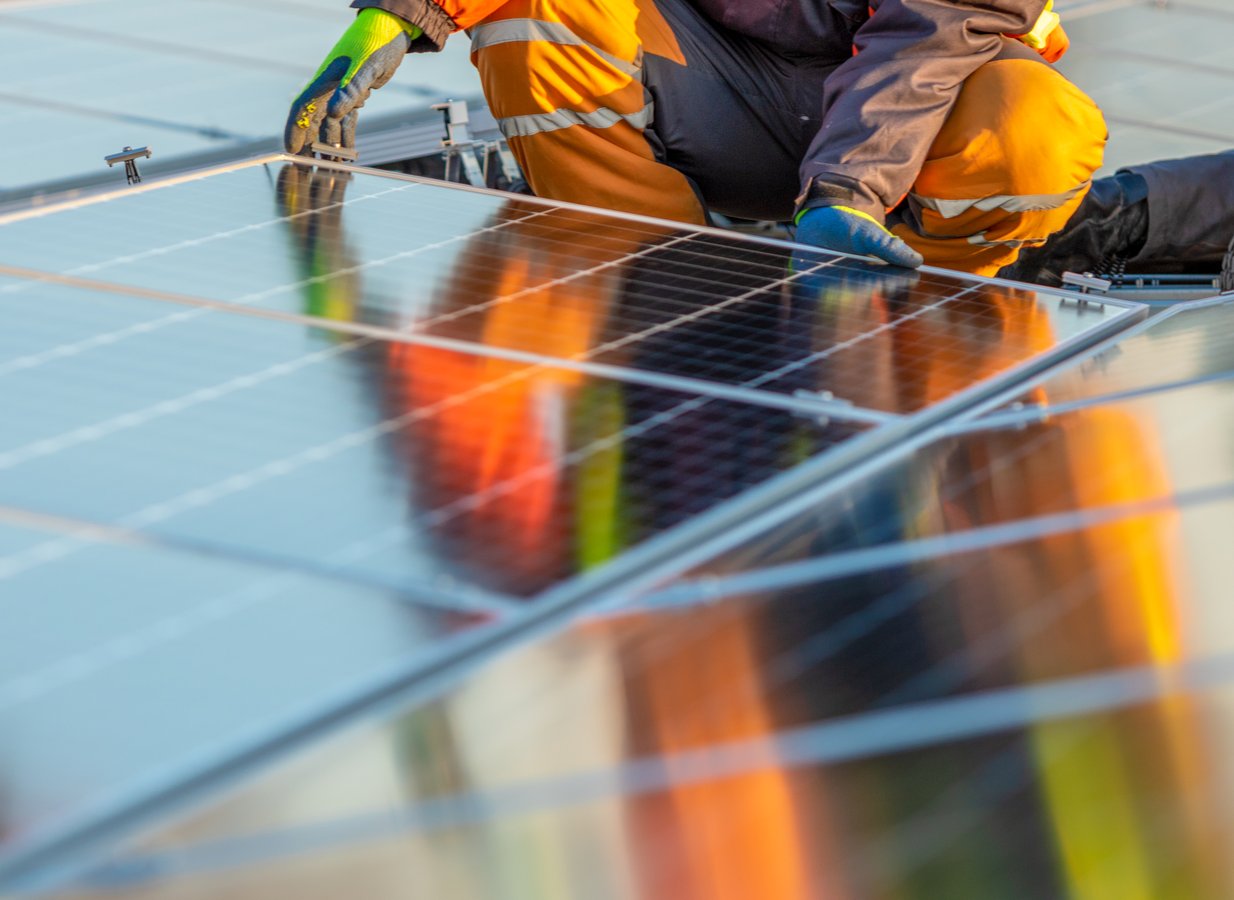
Short answer: yes. And it's probably easier than you think.
This is one of the most common questions we hear from project managers and superintendents evaluating solar-powered cameras for the first time. It makes sense — if your project is in Seattle, Cleveland, or anywhere with a reputation for gray skies, "solar powered" doesn't inspire much confidence. But how modern solar systems actually work is pretty different from what most people assume.
Germany proves the point better than we ever could
If you think your jobsite is too cloudy for solar, consider Germany. It averages about 1,716 sunshine hours a year, versus roughly 2,665 in the US, and every part of the country sits farther north than most of the continental US. December there gets about 1.3 hours of visible sun a day.
And yet solar generated around 18% of Germany's domestic electricity in 2025, up from 14% in 2024, overtaking both coal and natural gas. More than 5.5 million installed photovoltaic systems produced about 87 terawatt hours in one of the cloudiest countries in the developed world.
Michigan gets roughly the same annual sunlight as Germany, and solar works there too. Low sun hours don't disqualify solar. They just change the math on what size system you need.
Solar cameras don't need constant sunshine
Here's what people get wrong: the panel isn't directly powering the camera. It charges a battery, and the battery powers the camera. Your system stores energy during peak sun hours and draws from that reserve the rest of the time — at night, on overcast days, during storms.
Even cloudy days generate some charge, because high, thin clouds still let UV through. Dense, low storm clouds cut into production more, but a properly sized system accounts for that. The real question isn't how much sun you get — it's whether you have the right panel matched to the right camera.
Location determines your peak sun hours. A site might get eight hours of daylight, but "peak sun" — when the sun's intensity hits about 1,000 watts per square meter — might only be four or five of those hours. Phoenix might average 6+ peak sun hours a day; Portland might average 3–4. Both can run a solar camera, they just need different panel sizes.
Camera power draw determines how much energy you need to collect, and this is where OxBlue has a real advantage.
Cobalt runs on solar by default, not by exception
Cobalt's power draw is small enough that solar isn't a special mode — it's just how most Cobalt cameras run in the field. Under 1 watt in power-saving mode, under 3 watts even with on-demand video. A single 60-watt panel covers Cobalt almost anywhere, and the lease line starts even smaller: 50-watt compact setups scale up to 110-watt single-panel configurations, while purchase options run 50 to 65 watts. That low draw is why Cobalt holds up through weeks of overcast weather on a single stationary pole mount.
Sapphire runs on solar too, sized for what it does
Sapphire draws more power because it's doing more — low-light enhancements, motion detection, live streaming, and on some configurations, strobe lights, sirens, or talk-down audio. None of that rules out solar. It just means the panel and battery need to match the job. Moderate-sun sites run fine on a 110- or 130-watt single-battery setup. Lower-sun regions or heavier features call for 200 or 220 watts with two batteries. Demanding deployments go up to 260 watts, and the toughest conditions get a 400-watt dual-battery system for maximum reserve.
Every Sapphire solar system ships with a battery cabinet sized to the panel — a smaller 19"x15"x12" cabinet around 29 lbs for single-battery setups, a larger 24"x15"x16" cabinet around 32 lbs for dual-battery ones — so there's enough stored charge to ride out extended cloudy stretches.
For sites that need to move, the Solar Trailer (400 watts, mast up to 30 ft, 1,400 lbs) and the 30-ft Solar Crank-Up Telescopic Mast (370 watts, 1,125 lbs, one-person install with a telehandler) both give Sapphire full solar independence with the flexibility to reposition as the site changes — trailer towing on one end, crank-mast height on the other.
All solar configurations, Cobalt or Sapphire, run on 12V DC with a standard 30-ft camera-to-cabinet cable, extendable to 75 ft, and carry a 2-year system warranty.
The short version: Cobalt's efficiency means it can run on solar almost anywhere with a small footprint. Sapphire's solar options are just as viable — they're built at a larger scale because the camera is doing more work.
OxBlue takes the guesswork out of the sizing
Figuring out what you actually need is the real headache with solar — how big the panel should be, how much battery backup covers a stretch of cloudy days, what angle the panel should face. OxBlue's team of site analysts handles that. They evaluate the camera model, the features you plan to use, your geographic region, and your site's specific conditions, then ship a pre-configured, ready-to-install solar system matched to your exact situation.
What about really bad weather? Monsoon season? Hurricanes?
OxBlue has clients running solar cameras through monsoon season in Arizona, winter in the upper Midwest, and hurricane season along the Gulf Coast. The hardware is built for it. The bigger question is what happens when weather threatens to knock a camera offline during the one week a job actually needs it most.
Compass Data Centers has watched its solar stations hold up through some of the roughest conditions its sites see. "The cameras do well using solar power. Most of our cameras are on permanent poles, but we've recently added solar stations that have done well even during the monsoon season where we get very heavy winds," said Amanda Brown, Senior Construction Manager.
Brasfield & Gorrie ran into a different kind of pressure test during a highway interchange project in Tuscaloosa, where the Alabama DOT allowed only a narrow shutdown window to finish the work. Losing camera coverage during that stretch wasn't an option. "OxBlue was able to adjust our camera remotely during our critical shutdown period to increase image capture. The support team ensured we had what we needed without a problem. That ability was critical for us," the company said. It also cut down on the disputes that tend to follow a tight deadline: "Capturing the story on any given day, and during a critical time, helped prevent a lot of the he-said-she-said back and forth that can happen."
That kind of remote adjustment is the real answer to the weather question. OxBlue monitors camera health from its own end, so if a storm system is going to sit over a jobsite for days, staff can change the capture frequency before the battery runs down rather than after the camera goes dark. Most solar camera providers don't offer that. Most don't monitor the hardware closely enough to know there's a problem until the client calls.
A few rules to follow no matter where you are
Face the panel true south and angle it around 45 degrees — never flat — to catch the most direct sunlight, and keep it clear of shade from trees, buildings, or scaffolding. OxBlue's cabinets mount about 5 ft off the ground, which puts a standard panel around 13 ft up, above most ground-level obstructions.
Don't plug other devices into the solar system — it's sized for the camera, and adding equipment can drain the storage capacity. And when it's time to relocate or return the system, pad the panel, fill empty space, and shrink-wrap everything for transport.
So, should you go solar on a low-sun jobsite?
If Germany can power 18% of its national electricity grid with solar in one of the cloudiest countries on the planet, your construction site in Ohio or Oregon can power a camera that draws less than a watt. The sizing science has caught up to the point where solar works in far more conditions than people expect.
Want more details for your jobsite? Get a free site assessment or check out our resource on using solar construction cameras in the field.