

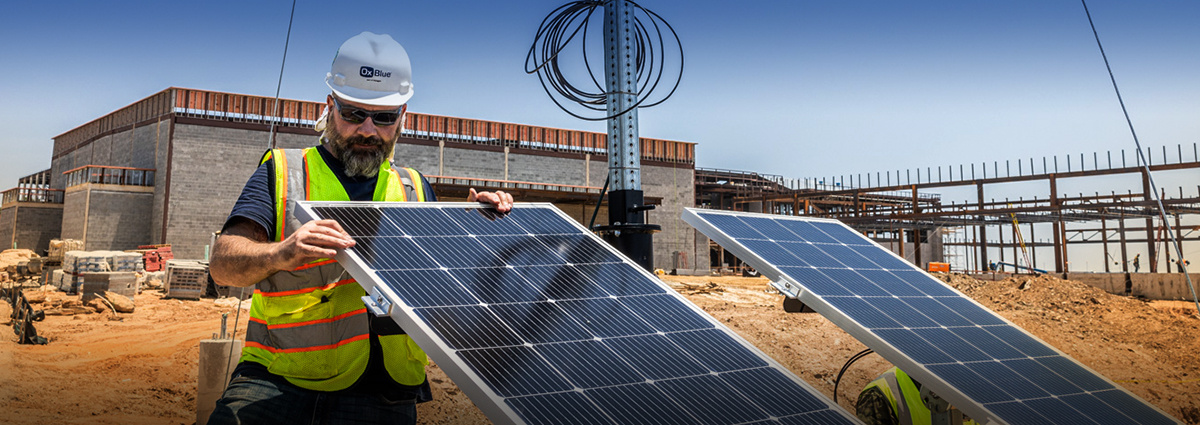
An unlimited power source for remote, on-demand access to the jobsite sounds like science-fiction but it’s the simple truth behind solar powered construction cameras.
Building from the ground up comes with a classic catch: you need power … but you have to build it first. The typical go-between is a gas-powered generator or external battery. But solar provides a better, long-term solution that can work at any jobsite.
Many misconceptions about solar make teams think twice about switching from batteries or a portable generator to using solar. Wireless jobsite cameras are just as effective when using solar power over single-use batteries or gas-running generators. Solar panels capture energy from the sun and store that energy in a rechargeable battery. Using solar can even power the cellular connection within a construction site camera. No WiFi is needed in order to get on demand access to the project.
But, there is a secret to ensuring you’re harnessing all the free energy you can: panel positioning.
What are some best practices for installing wireless solar jobsite cameras?
- Solar panels for construction cameras must be facing South, in the direction of the sun.
- Panels need to be positioned at a 45° angle so that as the sun rises and sets, the panel still captures the maximum amount of sunlight.
- Make sure there is no shade in the way of the panel, including from buildings or trees.
- Keep in mind that what impedes sunshine can impact how much energy your solar panels are able to capture.
What are some common misconceptions about solar powered wireless construction cameras?
A common rumor suggests that cloudy days or bad weather can make solar panels impossible to use. UV rays can penetrate cloud-cover, which still allows your panel to capture energy. Since the solar energy is stored in a battery, it can still be used during rainy days or even at night.Are solar construction cameras a good fit for all jobsites?
These questions will help determine if using a wireless jobsite camera with solar power is right for your project.- Do you need wireless, portable power for security or real-time visibility?
Solar panels can be placed on mobile trailers so you can move a jobsite camera around without worrying about power cords.
- Does your jobsite average at least 4 hours of sunlight a day?
Jobsites with less than 4 hours of sunlight can still use a solar camera, but may not have the power for certain features like live-streaming video.
- Do you have an open, South-facing unshaded area for positioning the solar panels?
Ideally, solar panels are placed in an open area that gets lots of sun. However, there are options for different jobsite needs.