
.jpg?width=80&name=L.C.%20Graf-Juarez(2).jpg)
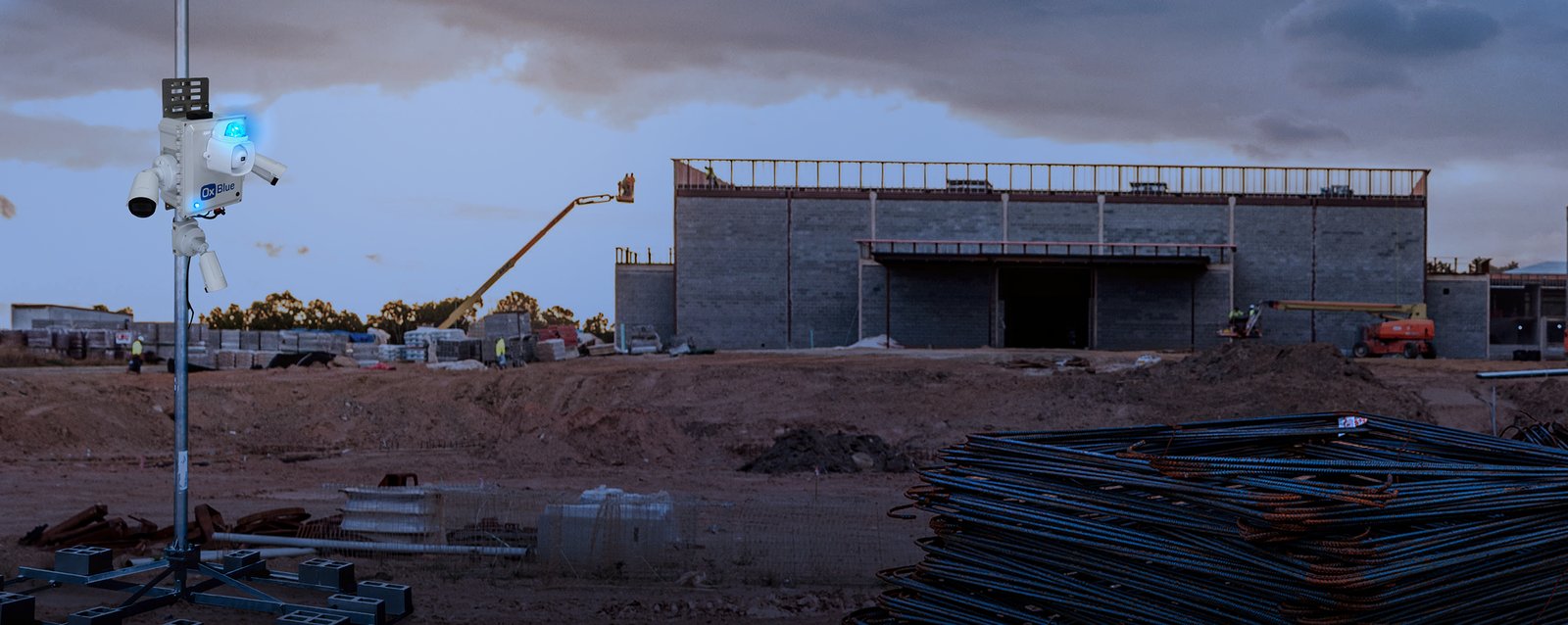
A strong security strategy begins with an honest look at your current defenses. Every construction site faces unique risks – open perimeters, high-value storage areas, or large staging zones – and the cameras you choose play a critical role in whether those risks are addressed effectively.
Taking the time to “audit your jobsite” means taking a deeper look at how each camera type works, where it’s best applied, and how you can layer features to protect your project at every stage.
PAN-TILT-ZOOM: Best for Large, Dynamic Areas
A pan-tilt-zoom camera provides flexible, multi-angle visibility with the ability to document four distinct views and a 360 panoramic record. With optical zoom up to 32x, PTZ cameras capture long-range detail that digital zoom can’t match.
Best for:
- Monitoring wide staging areas or equipment zones
- Tracking suspicious activity live as it happens
- Covering dynamic spaces where the point of focus changes throughout
Audit Checkpoint:
- Do I need a camera that I can move and adjust live to follow what’s happening on site?
- Would it help to zoom in and clearly see details like vehicles or equipment from far away?
STATIC INFRARED: Best for Sensitive Access Points
Static cameras excel at reliability and low-light performance. Infrared static models provide continuous monitoring of fixed-positions in dark or poorly lit conditions, ensuring entrances, exits and storage areas stay protected.
Best for:
- Entrances and exits that must be documented around the clock
- Laydown yards and storage areas with high theft risks
- Perimeter spots where lighting is limited
Audit Checkpoint:
- Are there entrances or exits on my site that I need eyes on 24/7?
- Do I need clear visibility in places where lighting isn’t always available?
MULTICAM: Best for Broad Coverage
Sapphire MultiCam expands coverage by supporting up to three static infrared cameras on a single power unit. MultiCam comes standard with integrated deterrence – strobe lights, siren, and talk-down audio – and can be powered by AC or solar. This makes it an adaptable solution for broad perimeters that meets common builder’s risk insurance policies.
Best for:
- Fence lines with multiple views that need constant coverage
- Perimeters that require visibility and deterrence
- Sites that benefit from less mounting equipment
Audit Checkpoint:
- Do I have high-risk areas (fence lines, perimeters, laydown yards…) that need continuous security coverage from multiple angles?
- Do I need strobes, alarms and talk-down audio to deter intruders?
- Do I have Builder’s Risk Insurance requirements to meet?
Building a Layered Defense Plan
On complex jobsites, there’s rarely a single solution. PTZ, static and MultiCam systems are designed to complement each other:
- Static infrared cameras deliver reliable, low-light coverage for critical points of entry.
- PTZ cameras provide sweeping visibility and zoom to track changing site activity.
- MultiCam systems extend static coverage across wider perimeters from a single unit.
Together, they create layered visibility — fixed, round-the-clock surveillance where it’s most needed, dynamic tracking where conditions shift, and expanded perimeter coverage where multiple views matter.
Final audit checkpoint:
- Does my defense plan include both fixed coverage and flexible monitoring?
- Are all areas of the jobsite covered with the right type of camera?
- Am I set up with deterrence features and monitoring so police can respond quickly if something happens?
By walking through these questions, construction teams can turn a standard camera setup into a tailored jobsite defense plan. With Sapphire camera systems, every options brings rugged reliability, smart detection, and deterrence features — the difference is how you deploy them to fit your project. That’s where the right partner matters. OxBlue goes beyond hardware, providing professional assessments, guidance and ongoing support to ensure every system is designed and deployed for maximum impact on your site.