
America's biggest grid build-out in generations is short on people and parts

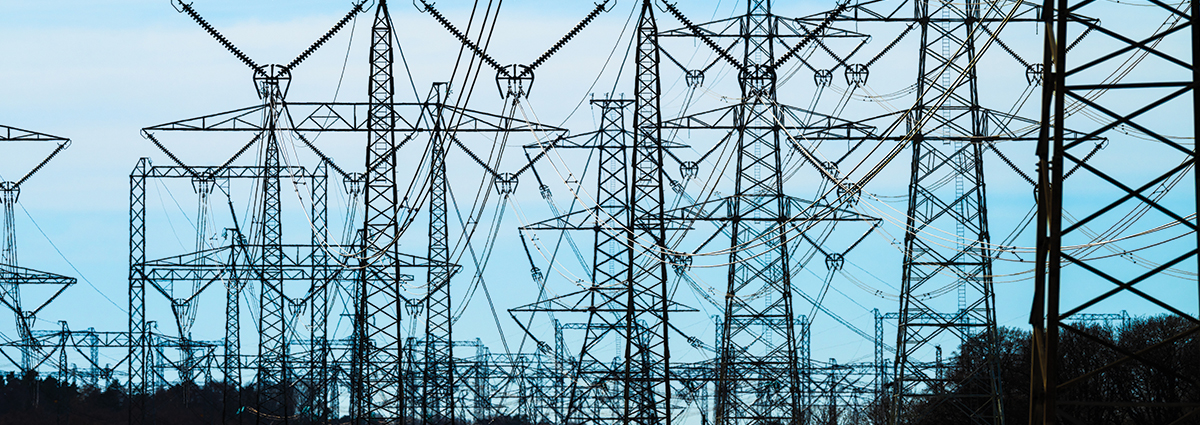
Utilities across the U.S. are entering the most significant transmission expansion in decades. Plans call for more than 4,000 miles of new 765-kilovolt lines, 50 to 70 new substations, and $55–60 billion in investment by 2032. Four forces are driving it at once: AI data centers pulling more power than the grid was sized for, renewable generation that needs new lines to reach demand centers, industrial plants electrifying processes that used to run on gas, and infrastructure old enough to need replacing regardless.
For many of the utilities involved, this is the first time they've built at 765 kV. It's one of the highest voltage classes in commercial use, and it leaves little room for error in design or construction.
Several regional megaprojects, not one national plan
The build-out isn't centralized. It's a set of parallel, multi-billion-dollar projects, each with its own owner, regulator, and timeline. MISO's board approved a $21.9 billion long-range transmission plan built around roughly 1,800 miles of 765 kV backbone across the Midwest. Inside that plan, AEP's Transource unit and Berkshire Hathaway Energy Transmission formed a joint venture to build a $1.2 billion, 200-mile line in Wisconsin, while ITC Midwest, Great River Energy, and Xcel Energy filed a joint application for a companion project in Minnesota. In Texas, ERCOT's board approved a $9.4 billion 765 kV "Eastern Backbone" — the most expensive project in the grid operator's history — and the Texas PUC separately approved 765 kV lines into the Permian Basin to keep pace with oil-field demand. SPP has four more 765 kV projects working through its own planning process.
The timing matters more than it looks. Every one of these projects needs the same specialized 765 kV crews and draws from the same small pool of transformer manufacturers, all within the same two or three years. The projects are spread across states, but the competition for the labor and equipment to build them isn't spread out at all — it's stacked on top of itself.
Two things are slowing it down
Skilled labor is the first constraint. Construction employers in transmission, distribution, and storage report broad hiring difficulty — 89% said so in the Department of Energy's 2025 employment report. Associated Builders and Contractors estimates the industry needs 349,000 additional employees in 2026 just to keep pace with normal demand, without counting new infrastructure funding. Nearly half of contractors already say the shortage is pushing back schedules.
Equipment is the second constraint, and it's turned out to be the tighter one. Large power transformers now carry lead times of up to four years, with Wood Mackenzie projecting a 30% U.S. supply shortfall for 2025, and prices have climbed roughly 77–80% since 2019. Around 80% of the U.S. supply is imported. In April 2026, the White House classified grid hardware as a national-defense supply-chain risk. Developers have started buying transformer production slots before a project site is even finalized, which moves procurement to the front of the planning process instead of the back.
Put those two constraints together and the picture shifts. It isn't just that fewer workers are available per project. Those workers are also building projects where the core equipment might arrive a year or two later than planned, which stretches timelines further and raises the cost of every delay along the way.
The irony: the biggest customer has the same problem
AI data centers are one of the four forces pushing this transmission build-out. They're also stuck on the other side of it. Data center construction hit $77.7 billion in U.S. starts in 2025, up 190% year-over-year, and it's projected to be the fastest-growing construction segment of 2026. Interconnection queues in major markets now run years, not months, and 82% of data center construction firms report the same craft-labor shortage showing up in transmission work.
The two builds are waiting on each other. A hyperscale campus can finish construction and still sit dark for months if the substation feeding it isn't ready, and a utility can finish a 765 kV line years ahead of the load it was built to serve. Both sides are running against equipment lead times, labor shortages, and security exposure on staged materials worth hundreds of millions of dollars — the same speed-to-power problem, playing out on both ends of the same wire. (We covered the data center side of this in more depth here: The Four Forces Delaying Data Center Construction.)
What that means on the ground
Transmission and substation work is inherently spread out — miles of right-of-way, remote interconnection points, sites without permanent staff. When crews and schedules are both stretched, superintendents and project managers can't be everywhere a slip happens or a subcontractor falls behind.
Longer, less predictable timelines also raise the odds of disputes over what was actually built and when, especially on unfamiliar 765 kV work with new equipment and thinner crews. Utilities and data center developers running several regional projects at once need a way to check progress without a site visit to every one of them, and owners financing multi-year, multi-billion-dollar builds need documentation that holds up when a transformer delivery slips or a schedule gets renegotiated.
Documentation becomes a competitive edge, not just a defense
Contracts on this scale don't get awarded on price alone. When a utility is committing $1.2 billion to a 200-mile line or $9.4 billion to a backbone project, it's betting on a contractor's ability to actually deliver, and a documented track record from prior work is part of how that trust gets built.
Compass Data Centers uses remote camera monitoring across its own high-stakes builds for exactly this reason — keeping every stakeholder aligned on schedule and progress without a site visit for every check-in. Teams that can show clean, timestamped progress across past 765 kV or substation work have something concrete to put in front of a utility or RTO deciding who gets the next award, a verifiable record of pace and quality.
A handful of things matter specifically for this kind of work:
- Coverage across scattered sites. A single dashboard showing every active right-of-way segment or substation location means a project manager checking on five sites doesn't need five separate visits.
- Power and connectivity that doesn't depend on the site being finished. Transmission and substation locations often have no permanent electricity or internet until the project itself delivers it. Solar-compatible cameras with built-in cellular solve for that from day one.
- A record that holds up in a schedule dispute. With transformer deliveries slipping a year or more past the original date, disagreements over who caused a delay are close to inevitable. Weather-correlated, dated images settle those arguments instead of prolonging them.
- Security for materials that are expensive and exposed. Conductor reels, grounding copper, and switchgear sitting on an unfenced rural corridor overnight is a real cost, and AI-filtered motion alerts catch it without needing someone stationed on site.
None of this fixes the labor shortage or gets a transformer built faster. What it does is give contractors a way to compete on proof, not just price, in a cycle where the utilities awarding this work are placing some of the largest bets in the industry's history.
The short version
- The current transmission build-out is really several billion-dollar regional projects running in parallel, all drawing on the same limited labor and transformer supply.
- Labor and equipment constraints are stacking, not spreading out, which raises schedule risk across every project at once.
- The data centers driving demand for this build-out are stuck on the same bottlenecks, one level down the supply chain.
- Utilities awarding this work are choosing contractors partly on track record — documented past performance is becoming a differentiator.
- Remote, solar-powered, cellular-connected documentation solves three problems at once on these projects: coverage across dispersed sites, dispute defense, and materials security.