

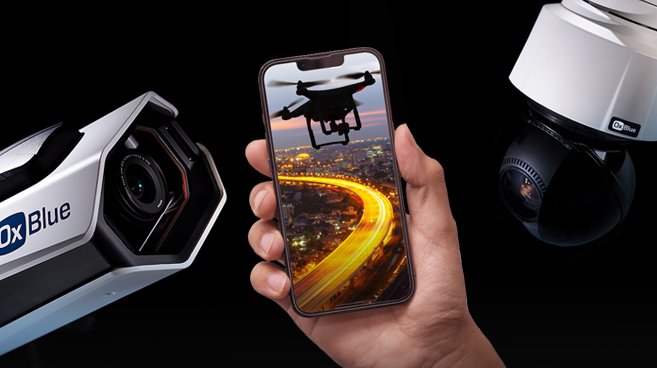
The technology you use on a jobsite keeps your team connected to their work—and to each other. To create this level of transparency and collaboration, you can choose from a variety of systems. At the top of the list are construction video cameras.
But many jobsites now use drones to capture aerial imagery, and everyone has a smartphone in their pocket. Can’t those devices step in to monitor job sites? And what about surveillance systems?
Let’s compare these three options to construction cameras.
Smartphones may be convenient, but can they do the full job?
Sure, your phone can take pictures or videos. But they can’t:
- Monitor 24/7
- Offer a search option
- Extract data from image
- Provide a way to report back on the jobsite
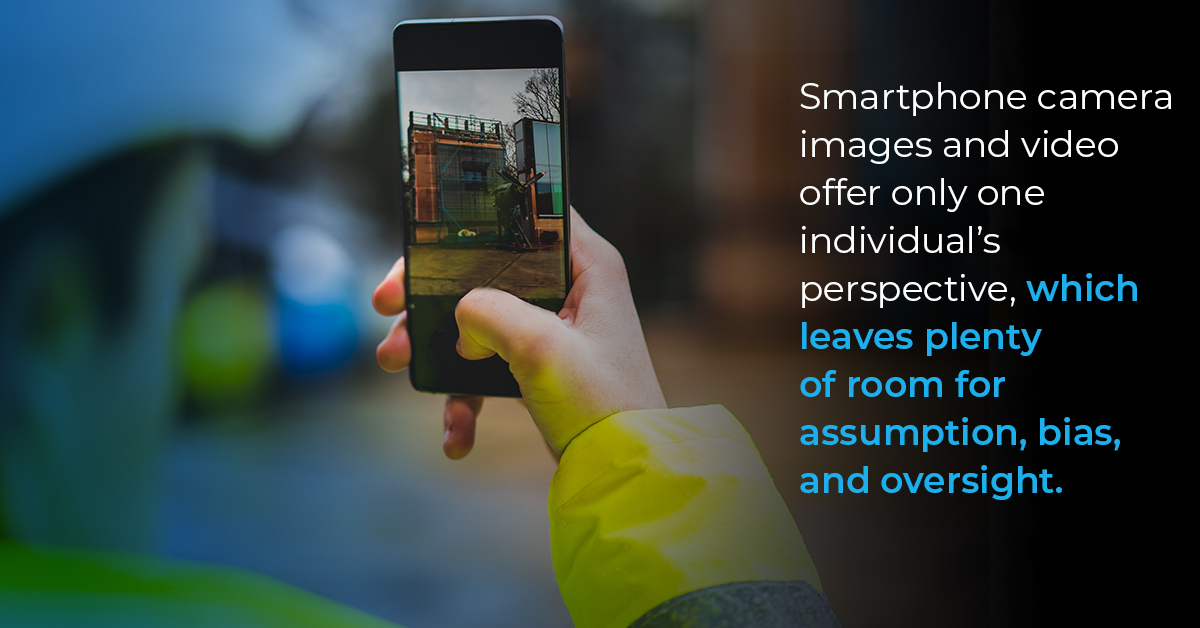
Smartphone camera images and video offer only one individual’s perspective, which leaves plenty of room for assumption, bias, and oversight. The devices don’t allow remote users to manage and adjust the angles or provide your team with alerts about events or suspicious activity in real-time.
Until images are downloaded to a shared platform, they live on that single device. Syncing images and videos from multiple devices to one location can be challenging and time-consuming. It also creates the opportunity for mistakes to occur during the transfer process.
Here’s how it stacks up to a construction camera:
| Smartphones | Construction Cameras | |
| Pros |
|
|
| Cons |
|
|
With all the training and manpower required, are drones worth the cost?
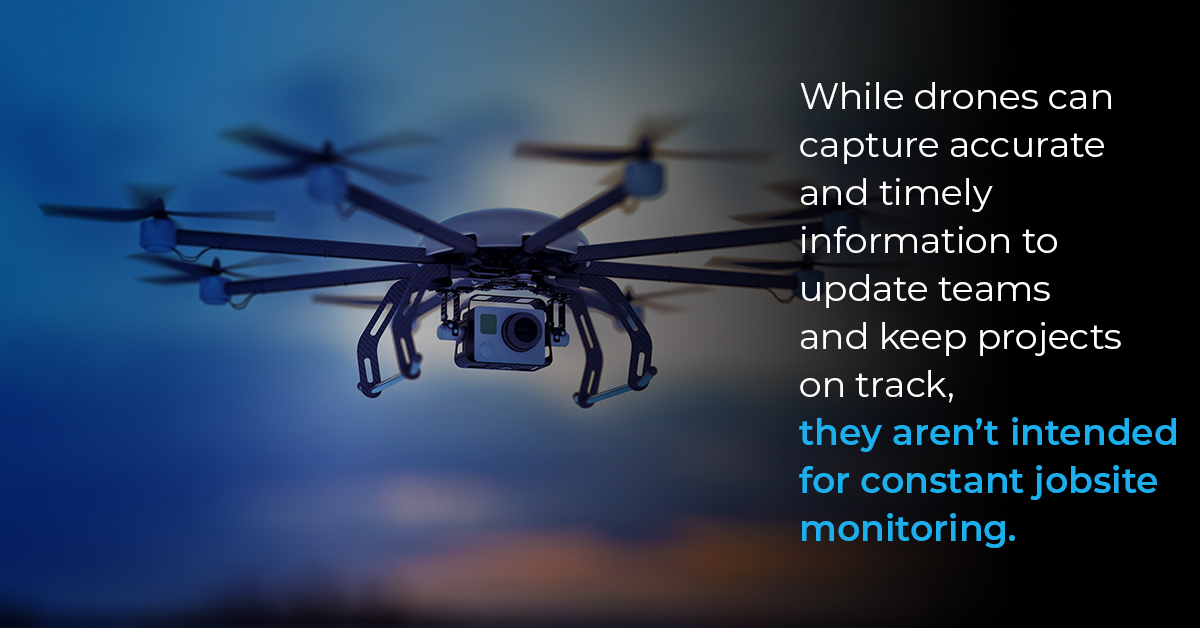
While drones can capture accurate and timely information to update teams and keep projects on track, they aren’t intended for constant jobsite monitoring. Instead, drones are best for:
- Surveying and site analysis
- Inspecting for and identifying issues like cracks and corrosion
- Providing aerial imagery
As opposed to cameras for construction, drone operation also requires dedicated manpower. They’re expensive, and they require hours of personnel training and certification to operate and maintain (without the training, improper use can create damage and liability issues).
Many regulations surround drone usage, and these protocols change often. For example, special permits may be needed before drones can be used—especially on construction sites in urban areas.
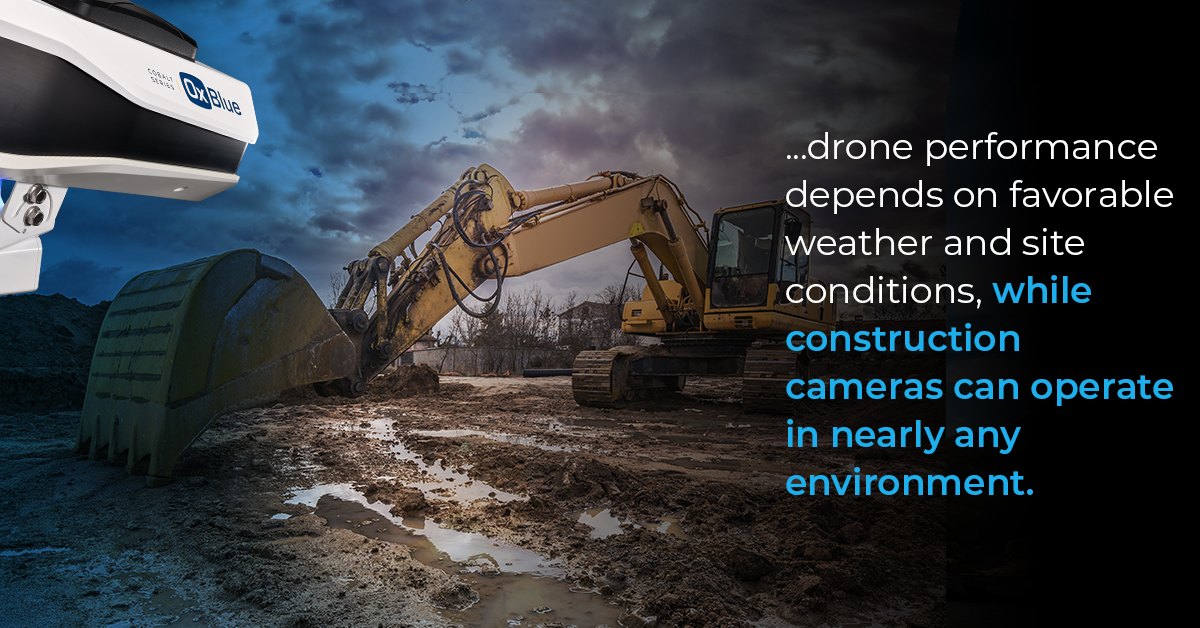
Finally, drone performance depends on favorable weather and site conditions, while construction cameras can operate in nearly any environment.
| Drones | Construction Cameras | |
| Pros |
|
|
| Cons |
|
|
Surveillance cameras can monitor your site, but they may be difficult to navigate
Many consumer-grade surveillance cameras offer monitoring capabilities—but that’s all they provide. They don’t include jobsite data capabilities, such as:
- Activity, safety, and weather tracking
- Integrated AI to easily search for specific images
- Data reports on jobsite trends
These camera systems often lack behind-the-scenes support such as coordinating installation and relocation work, verifying camera connectivity, and monitoring camera performance.
In addition, surveillance cameras aren’t simple to add and remove users or grant granular access to specific users (GCs, consultants, owners, etc.).
| CCTV/Generic Options | Construction Cameras | |
| Pros |
|
|
| Cons |
|
|
Cameras give you much more than images
Construction cameras take job site intelligence and monitoring to levels that drones, other camera systems, and smartphones can’t.
They provide you with much more than images. From live jobsite views and security monitoring to AI-powered analytics that inform decision-making, the right jobsite camera system can improve job site communication, safety, and productivity.
You decide: Which option is worth the investment? Learn more about OxBlue’s construction cameras.